Monday, July 14, 2008

YF-415

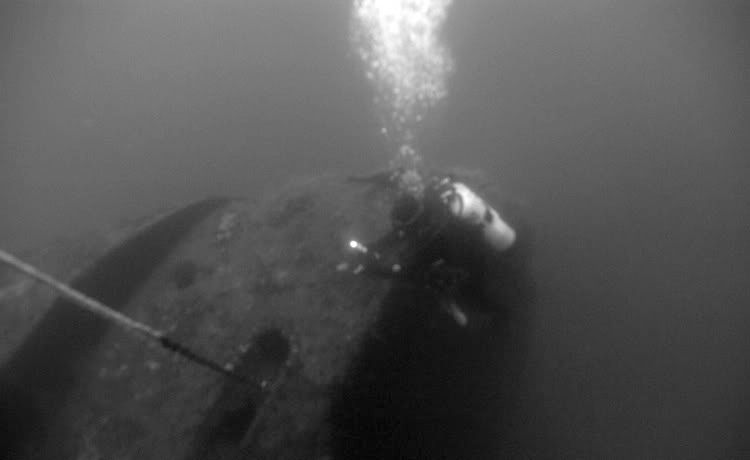
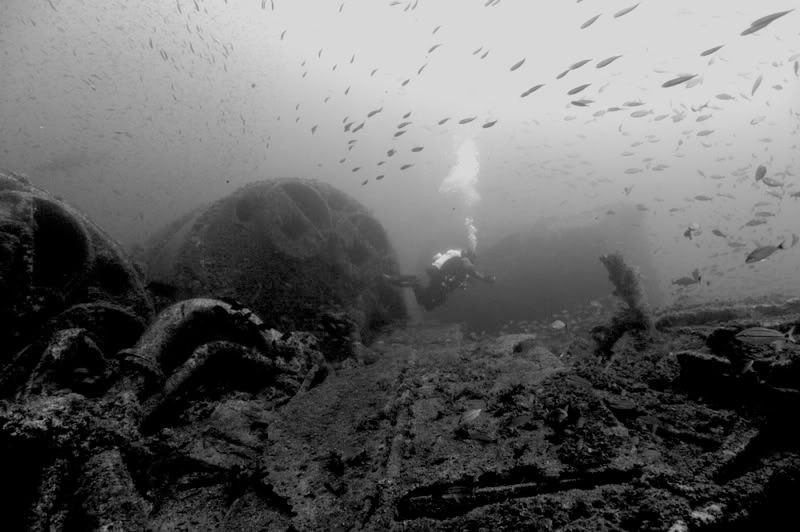
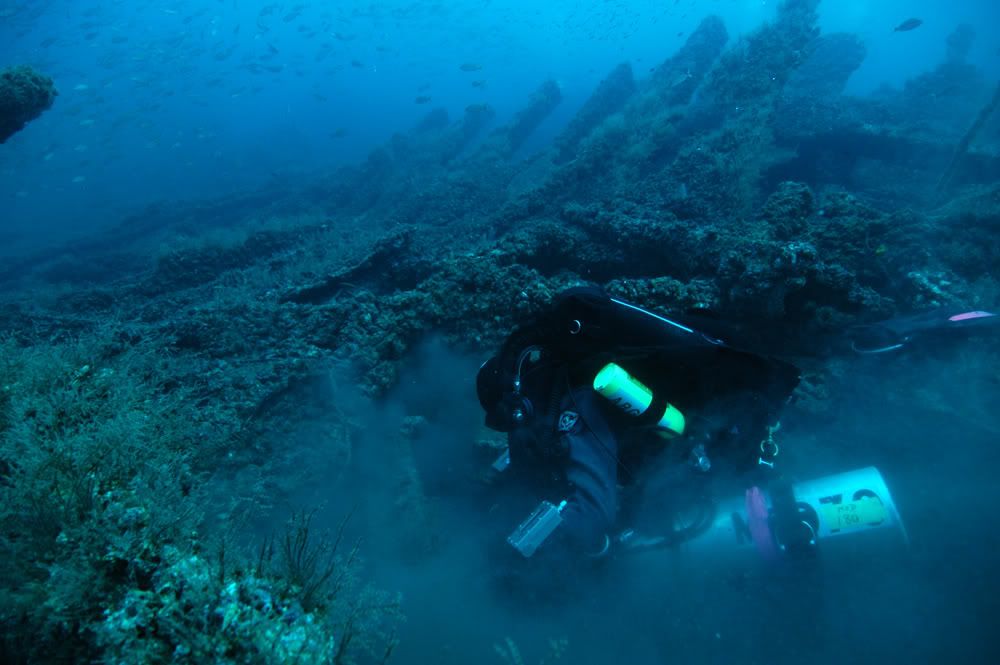
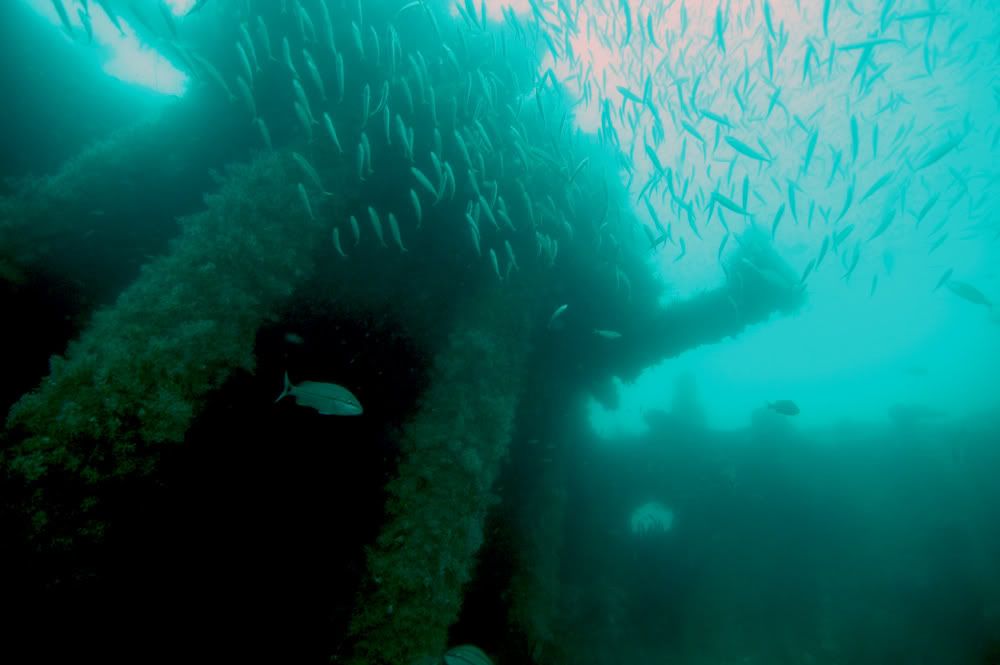
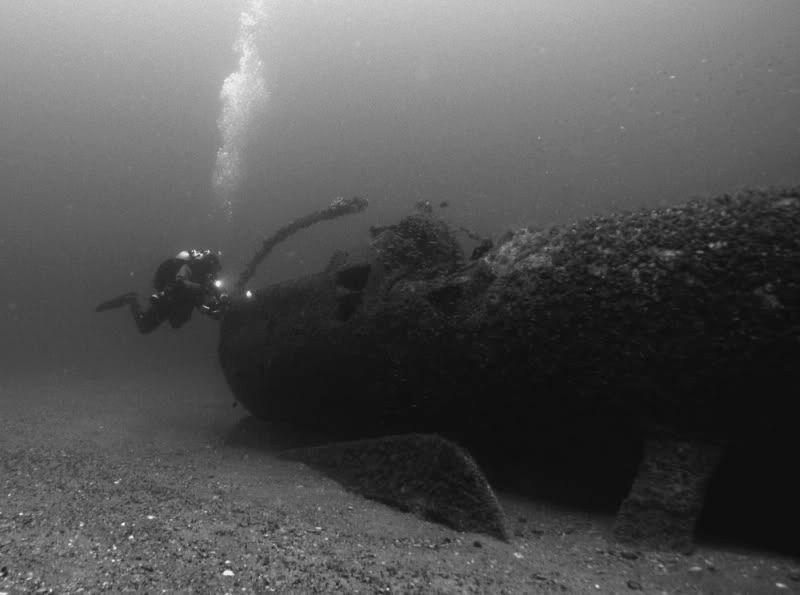
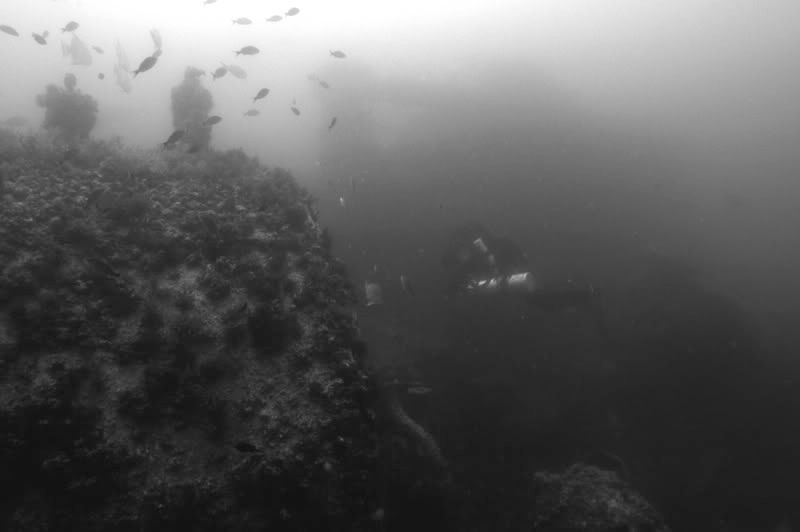
Bill inspects the port propeller on the YF-415


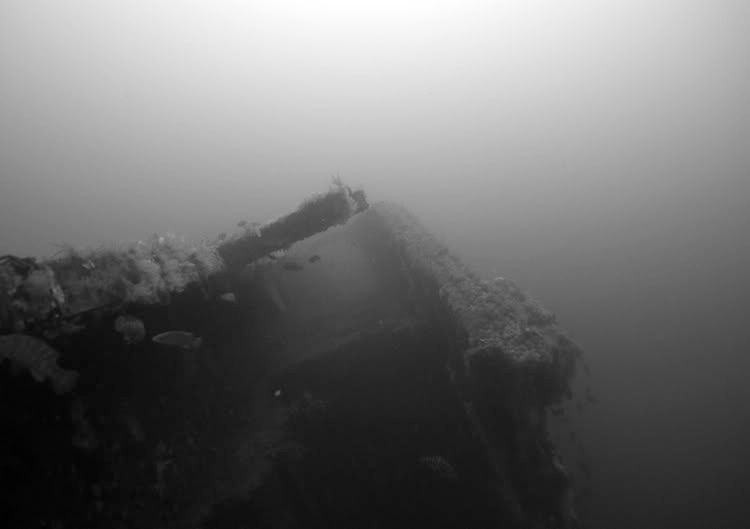
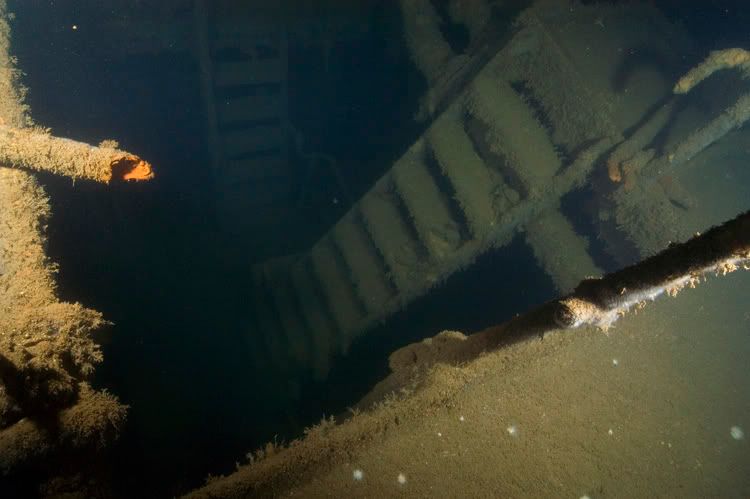
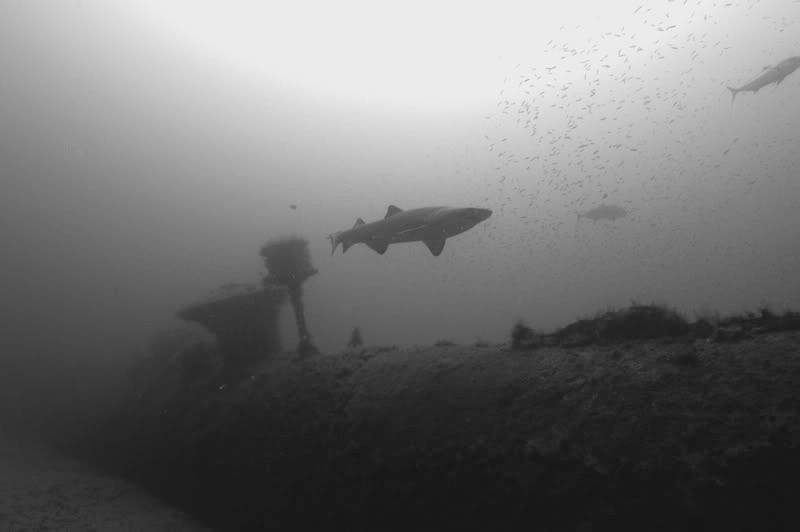
Snuck away from my busy schedule for a short road trip with Bedford up to New England this past weekend. I had heard many good things about the Gauntlet which is run by Heather Knowles and Dave Caldwell out of Salem, Massachusetts and took the opportunity to hop on a charter to the USS YF-415. The YF-415 was a Navy lighter that sank when its cargo of ordnance exploded and sent her to the bottom of Massachusetts Bay, 230 feet below. The wreck has been found and identified relatively recently and you can read much more about the ship and discovery on the NADE website.

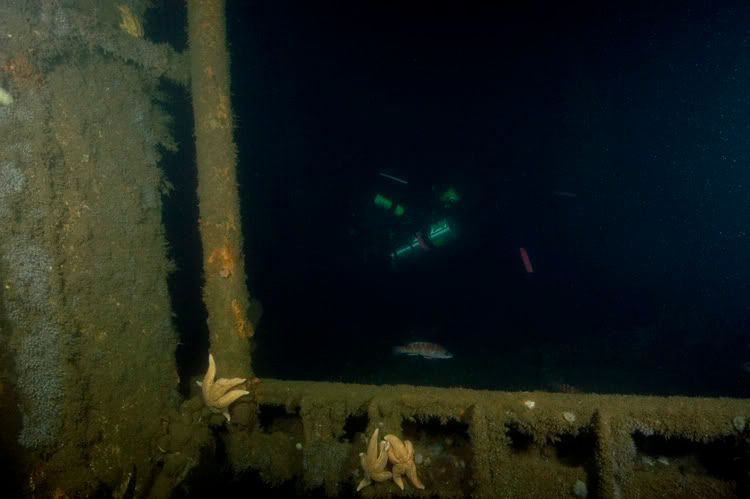
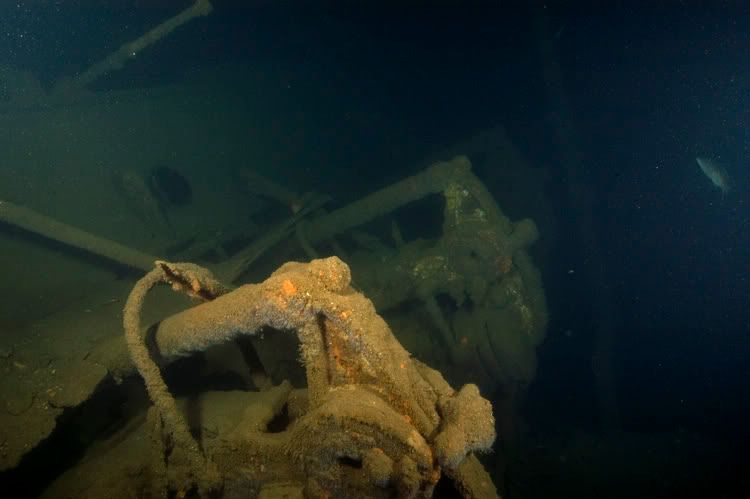
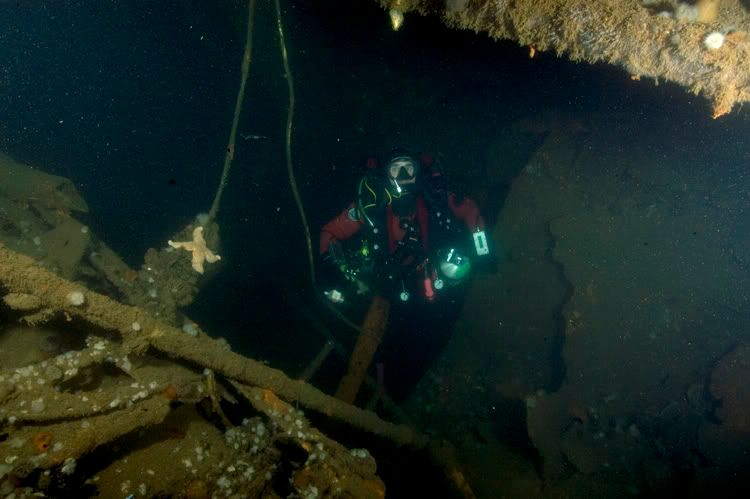
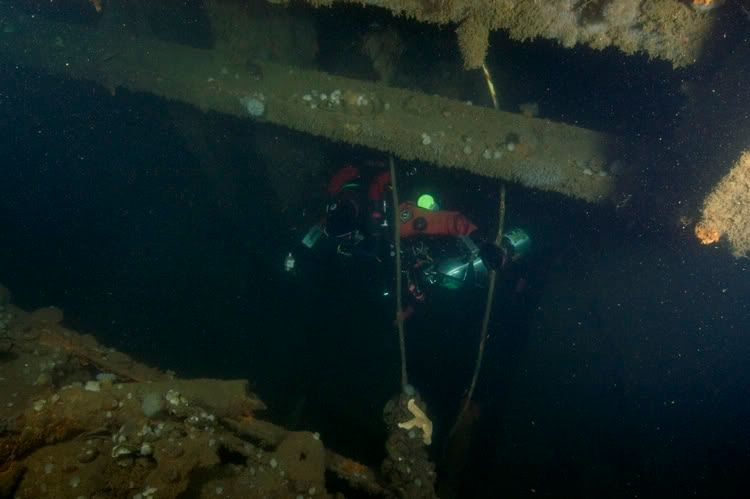
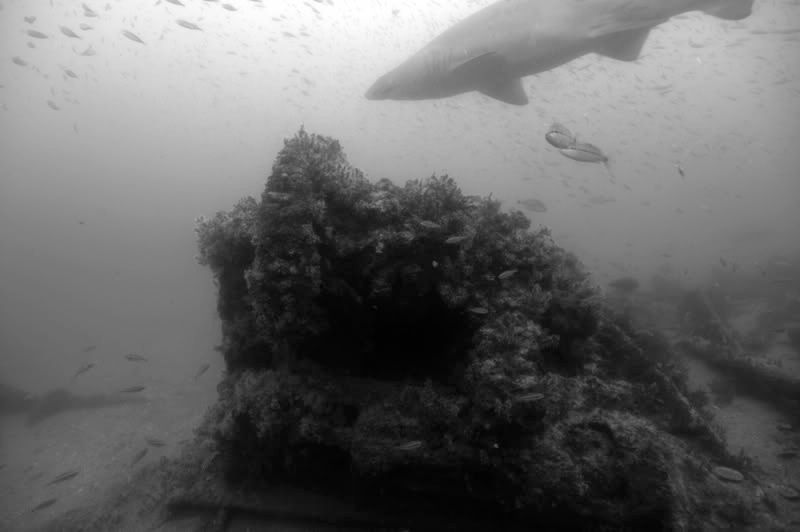
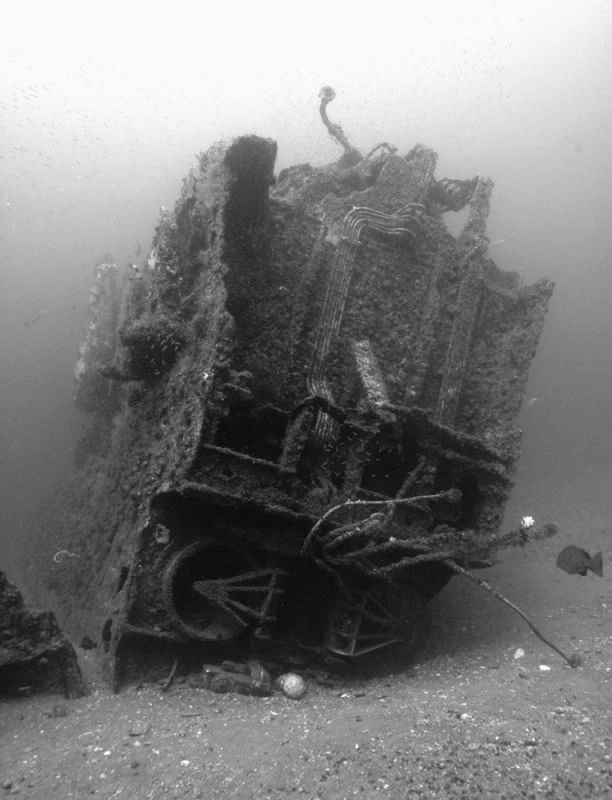
The ride out to the wreck was short by Jersey diving standards and we were on the wreck in under an hour which was pretty sweet. We splashed into a school of small dogfish who gave us some curious looks as we paused for a bubble check at 20 feet before heading down. The visibility in midwater was great and slowly faded from a bright emerald green to darker and darker shades before finally going lights out with only hints of ambient light remaining and about 15 feet or so of visibility but with a good amount of particulates which made me wonder if dragging the camera was a lost cause. The wreck isnt that big and we did a quick orientation which was easy since we were tied into the large towing bit on the aft deck. I fired up the camera which caused some confusion with my unsuspecting buddy. We dropped over the elliptical stern and checked out the twin props which rise 10-15 feet off the bottom. Coming back up the hull to deck level was a treat as the wreck is completely carpeted in beautiful anemones and little orange fishys. We headed forward and explored what remains of the superstructure. We had just dropped back down to the main deck forward of the superstructure when Bill gave me the light and signal that he was cold enough (it was 42 F from 230 up to 20 feet) and ready to roll a little earlier than our planned bottom time. Deco was uneventful until we met up with our dogfish friends again at the shallow stops who kept us company and made the long hang go quickly (for me at least).

The Gauntlet was a nice boat run by good people and it's safe to say we'll be back.


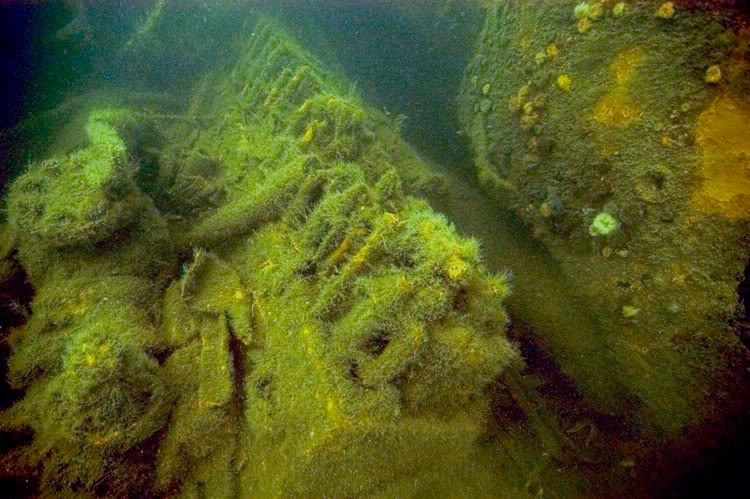
Side view of aft doorway into the superstructure and towing bit (right)


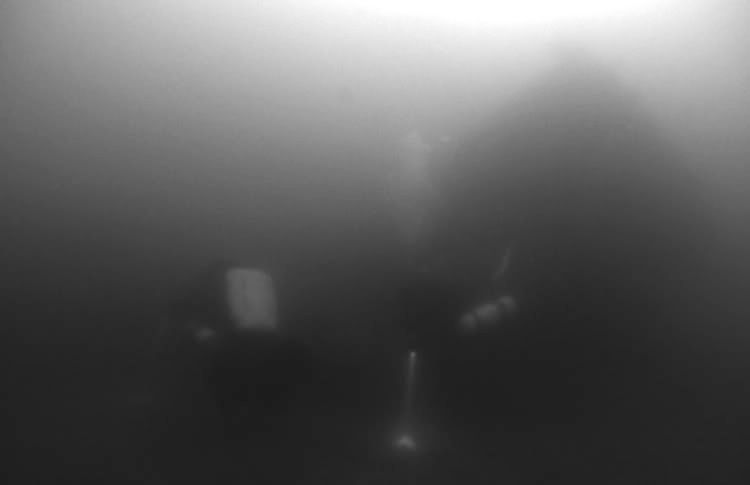
Dropping over the stern, you can just make out Bill's light


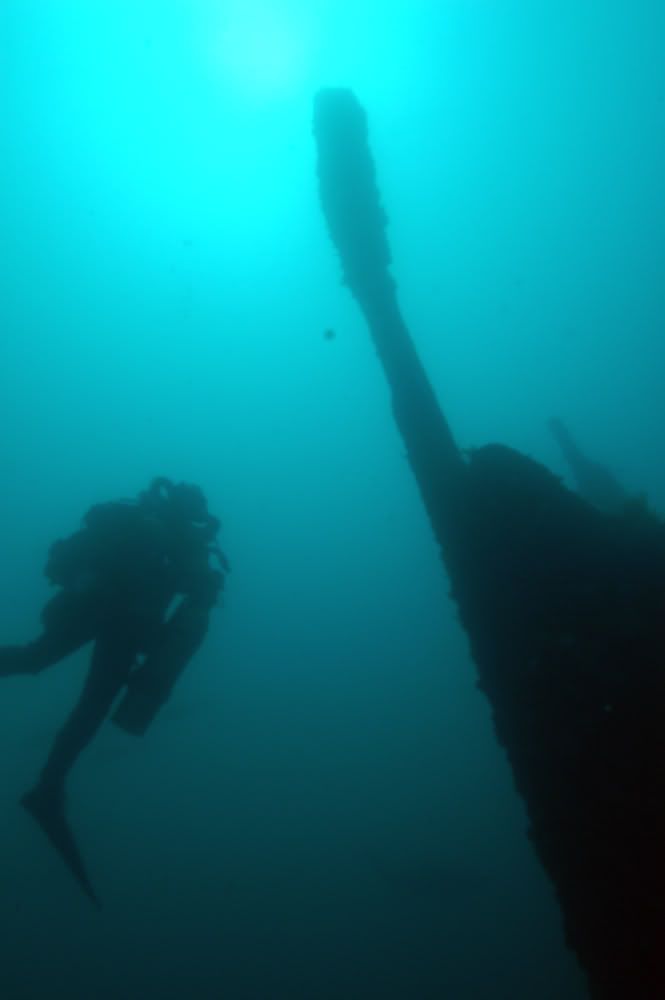
Port side propeller of the YF-415


Heading back up to the main deck level


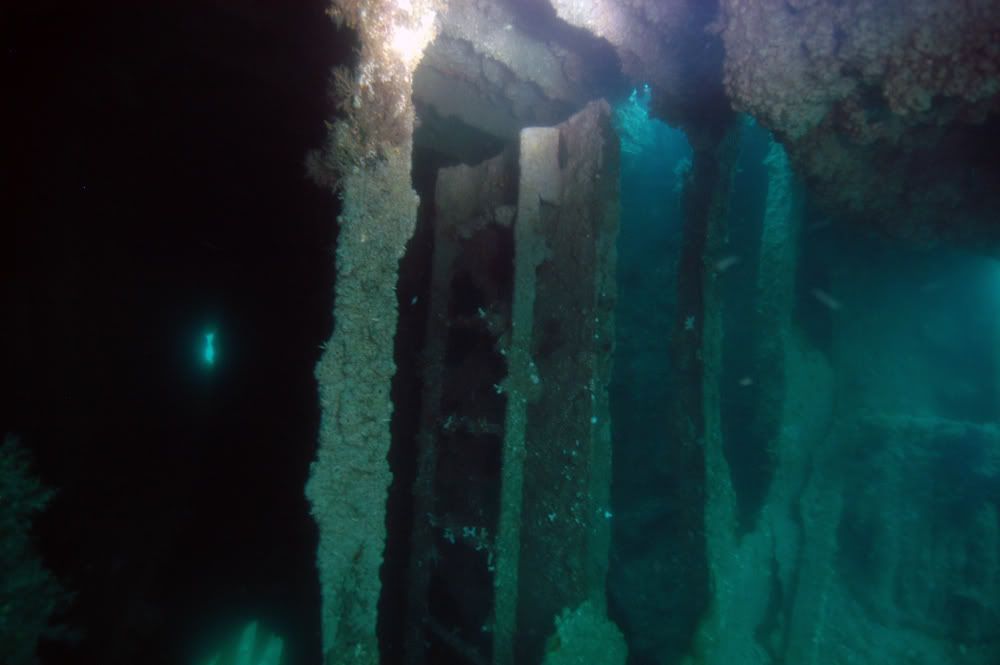
Inside the deck house


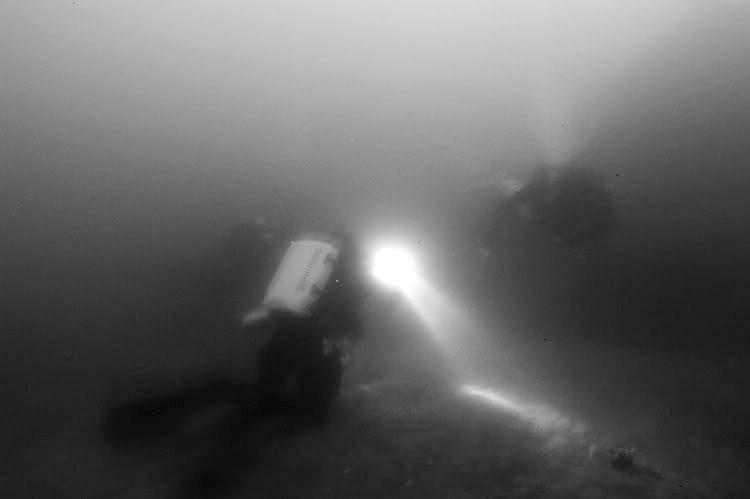
Bedford got a little disoriented by the flashing lights


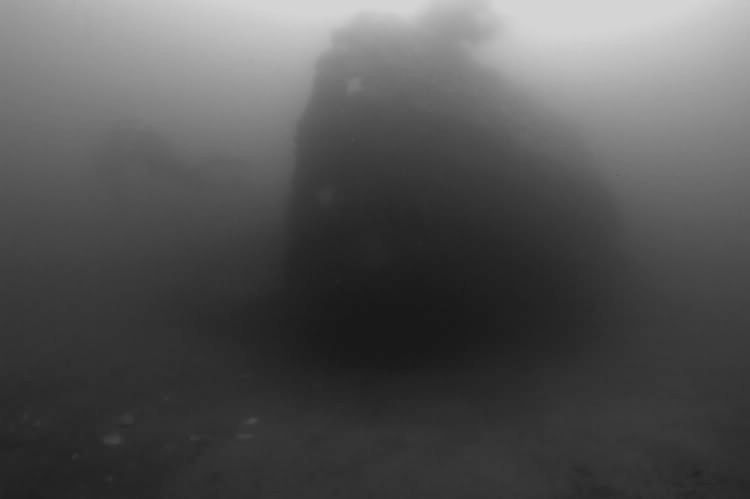
The remains of the periscope (just kidding this is where the smokestack was)


Looking inside the hole in the above image


Time to go


More info:

North Atlantic Dive Expeditions

Gary Gentile's newish Shipwrecks of Massachusetts: North

Saturday, July 12, 2008

Chesapeake Bay

Sorry for the non-dive post but people keep asking about where I am living now so here is the overdue shot before I split for the weekend...

My front yard :-)

Sunday, July 6, 2008

Stolt Dagali

Dan Martinez inside the engine room of the STOLT DAGALI


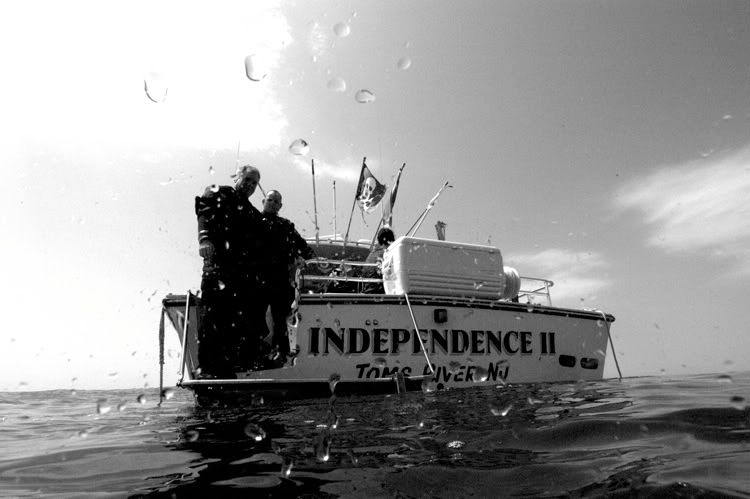
Made it out to the STOLT DAGALI today and got a chance to play with my strobes. Despite the flat seas we were forced to proceed at a reduced pace due to some heavy fog. The Independence II steamed on and we made it in decent enough time. The STOLT is one of the areas best dives and offers a little of something for everyone. Bill tied us in nice and high on the top of the wreck around 60 fsw. The first time Jersey divers on board were spoiled by the flat seas, lack of current, and great visibility which was at least 40 feet on top of the wreck but dropped down to around 15 feet or so near the bottom at 130 fsw. I headed down to the sand to play with my exposure settings before taking a tour along the sand. I gradually worked my way up and came across Danny who was entering the engine room area. Anxious to have a model and test the power of my strobes in the inky darkness of the cavernous engine room, I followed suit. I think Dan was annoyed with the blinding flashes because he didn't waste much time disappearing out of sight into a hatch going deeper into the recesses of the tanker. All too soon it was time to head outwards and upwards.


Top of the wreck looking forward


Entering the engine room


The engine


Heading up

Tuesday, July 1, 2008

Identification of the WWII tug KESHENA


After diving the KESHENA last week in North Carolina I read in Gary Gentile's Wrecks of North Carolina South book on the boat ride in that the wreck had been first positively identified by New Jersey's own Gene Peterson who recovered the letters off the bow. I contacted Gene when I got back to try and find out more about this piece of wreck diving history and he was awesome enough to share the story of the recovery and a picture of the brass letters which now reside in the Atlantic Divers shop. Here's the story from Gene, hope you enjoy it as much as I did.
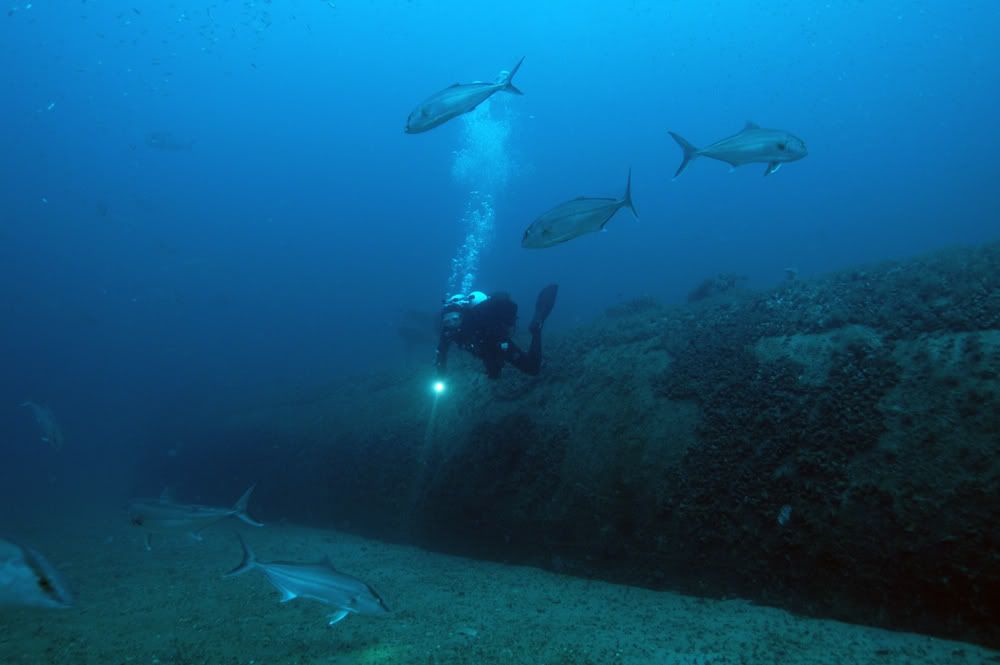

From Gene Peterson:

"I can't recall the year... it was a couple dozen years ago. So many wrecks we dived with fishing boats and then Truman Seaman, Roger Huffman, Eddie Jack and Arty Kirshner. I know it was speculated that the little tug was the Keshena when we dived it. It wasn't one of our choice destination, but I thought it was a real pretty dive. I guess because it was shallow the group figured it was picked over. All the divers came up wanting to go to another sight, saying there wasn't much to see. I was mating for Roger and I remember being exhausted from all the weeks tie ins, so I sat out. Arty didn't want to pull the hook so I made a quick bounce swim to the wreck, did a little tour and then went to pull the grapnel snagged in the bow. I did a double take of the chain which was rubbing the growth off the side of the bow. There attached in place were all the letters. I pulled out my knife and popped the loose brass KEHENA letters from port side and then swam to the other side and popped off the other letters which also spelled KEHENA. The S was missing on both sides. Some of the letters were made of lead and quite possibly the S may have been made of steel or just fell to the sand. I did look but I never found either. That dive lasted only about 10 minutes including recovering the letters and pulling the hook. Back on the boat six divers were waiting anticipating a one of my dull anchor pulling stories when I dumped my goody bag on the deck with 12 assorted brass letters. I kept one side of the letters and gave each of the group one letter. They were quite happy and wanted to return anticipating more discoveries. We did find a couple port holes but the wreck was so sanded in there wasn't really much more. I told Gary about the letters and we both speculated that the S must have been steel and corroded away, fallen to the sand or is still there or the name was put on the bow by an illiterate yard worker on a Friday. A few months later a lucky female diver recovered a large brass bell. It did have the name on it and it was spelled KESHENA. She positively identified the wreck's correct spelling. "

Monday, June 30, 2008

Shedding light on the PINTA

Cargo of lumber spilling out of the PINTA broken holds


Stern of the PINTA


Sunday the NOAA guys were way off and we headed out to the PINTA on the Independence II in seas that were quite nice, proving once again that sometimes you just have to stick your nose out and sea. The PINTA was chosen as the first New Jersey dive for a group of wreck diving students who had traveled all the way from Kentucky and Louisiana to see what diving in the North Atlantic is all about. We were tied in quickly and divers were quick to splash in the off chance that the deteriorating weather forecast for the afternoon was correct. After everyone else was taken care of I hit the water with camera gear in hand to work on some new techniques. My goal is to get some wide angle shots of some deep shipwrecks using long exposures and this was my first time trying out a tripod. Descending down the line and expecting to find the bow I scratched my head as I landed in the sand next to the rudder (I guess NOAA aren't the only ones handing out bad reports). The visibility was a bright 20 feet or more. There was a decent surge on the bottom that made getting crisp focus a little tricky with longer exposures. The pictures aren't that great but I accomplished what I needed to. I was able to barely make out the lights from Richie's class doing drills in the distance and got a decent shot without them ever seeing me by using a 2 second exposure. In the image of the stern above I was out in the sand and could just make out a shadow of the wreck and had no idea the 2 divers you see had just come down so using a tripod definitely gets results that are not otherwise possible.
At the end of the day most people were able to sneak in 2 dives and we were hitting the inlet by the time the forecast caught up with reality. A great day of diving and some out of towners were wondering what was up with all the hype of deep, dark, and dangerous that is usually associated with New Jersey diving.


The now exposed engine room area


Close up of engine


Cargo


Tuesday, June 24, 2008

Cape Hatteras report

June 20-22


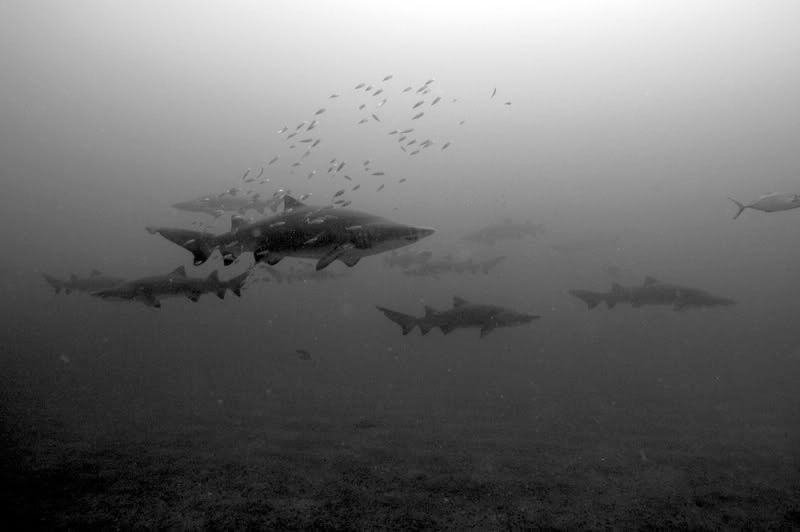
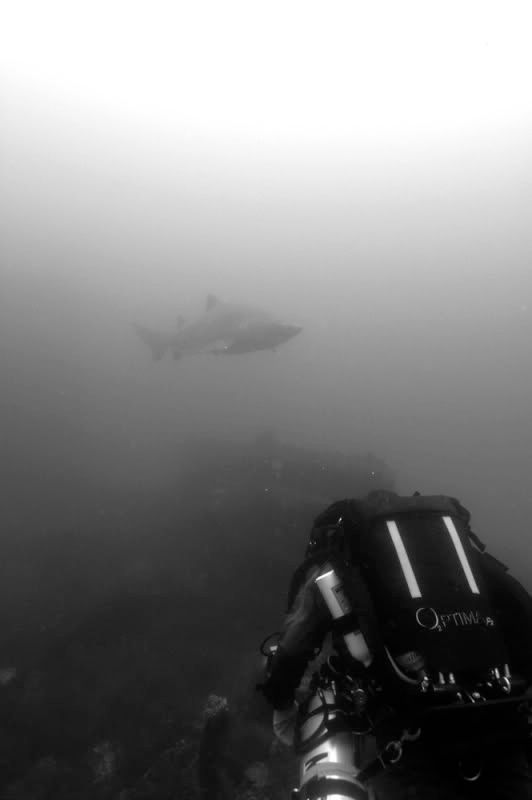
This past weekend the gang headed down to Cape Hatteras for three days of diving on some great wrecks in the clear warm Gulf Stream waters with Capt JT on the Under Pressure. Friday we hit the Proteus. This 390' passenger freighter sank in 130 fsw in 1918. Hitting the water the visibility was incredible and continued down to the wreck. I was greeted by large numbers of sand tiger sharks and a sleepy green sea turtle who didn't seem too impressed by my intrusion. Large schools of baitfish swarmed the wreck making wide angle shots difficult and I found myself cursing at them repeatedly into my DSV throughout the dive. I headed off to the stern and found a huge school(?) of sand tigers congregating aft of the majestic rudder and propeller. I crossed paths with Danny who pointed out a porthole and although a little bent up had enough sand blasted shiny brass poking through the growth to seduce us into a second date. Back by the boilers schools of baitfish were swarming between them with schools of hungry jacks on their tails.

After some surface interval fishing Danny and I headed back in to try and get the porthole. It posed a tougher challenge than we originally thought but after 30 minutes of pounding we had it on a bag.

Saturday and Sunday the plan was to dive the E.M Clark. A tanker torpedoed in WWII and (allegedly) one of the best dives off the East coast. Alas as is often the case in Hatteras plans didn't play out as well as they did on paper. Saturday we had good seas and even hooked into the wreck but you could have heard a pin drop as JT announced it was undivable. To prove it to us he dropped a 15 lb weight over the side which was promptly waterskiing horizontally off the stern in the 3kt current. With heavy hearts we headed in to the paddlewheeler where we found the current "better" but still kicking at around 2kts. Eventually we ended up on the Keshena. This small wreck was an ocean going tug that sank during rescue of the torpedoed J.A. Mowinckel during WWII. As the wreck is in only 90 feet of water the open circuit guys weren't too thrilled about blowing an expensive Clark mix (a nice advantage of the rebreather), but JT and Bill were nice enough to lend some doubles so everyone could get a dive in.

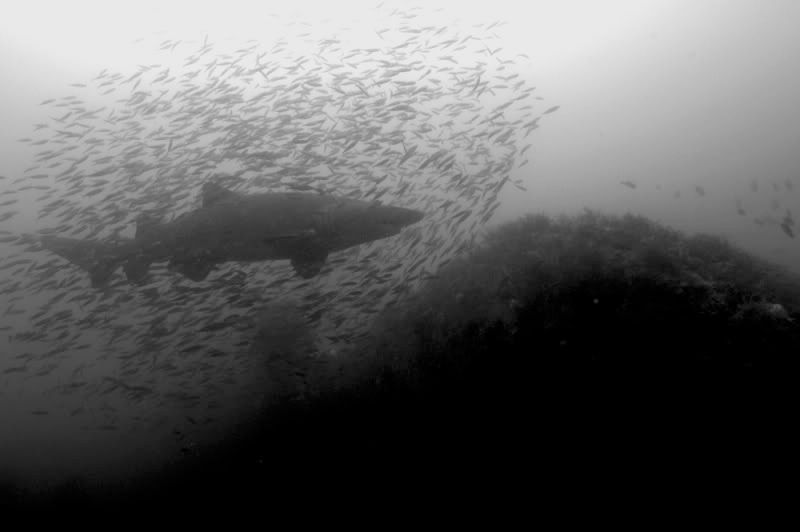
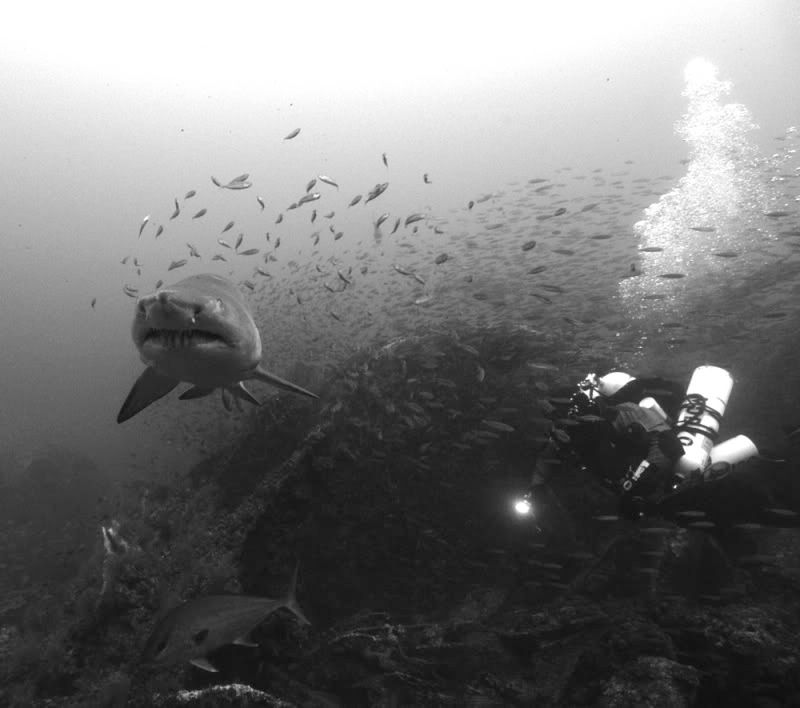
The vis on the Keshena wasn't as good as the Proteus but still a nice 30 feet or so. The wreck is pretty broken down except for the bow which rises about 20 feet off the bottom. It is still continuous so navigation is easy. Sand tigers were also present here along with lots of trigger fish.

Sunday the wind was still blowing out of the south and with rougher seas we went with JT's judgment that the current over the Clark would probably still be kicking and decided not to risk being in an area with not many other options and headed for the USS Tarpon.

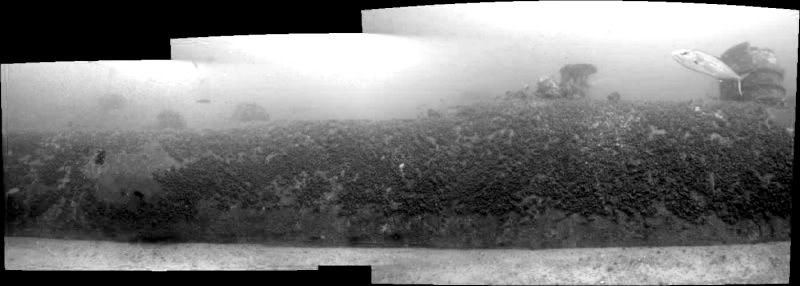
The Tarpon was a US submarine that sunk in 140 fsw while under tow to the scrapyard in 1957. The seas were a little bouncy on the ride out and we were given the option of stopping at the Dixie Arrow, but we opted to soldier on and give it a go. On site the conditions were again spectacular and most of the sub could be seen laid out before you around 70 feet. We were tied in near the conning tower which has fallen/been pulled into the sand. I wanted to give a go at making a panoramic composite image of the sub and spent most of my dive snapping shots down the hull. Many sand tigers surrounding the wreck along with lots of other life which made for an incredible dive.

We pulled hook and trolled over to the Dixie Arrow for dive 2. Must not have been my day because "I trolled for 2 hours and all I caught was this sunburn". Oh well, it was fun. On the Dixie Arrow the visibility was around 40 feet and i nearly crashed into a sand tiger descending the line which terminated between the boilers and huge engine. Danny and I swam forward towards the bow passing some large barracuda and BIG sand tigers. Most of the mid section is pretty flattened out until you get to the bow which still stands high off the bottom. A great dive and a great way to end out the trip. Can't wait to get back!


Proteus


Keshena


Tarpon


Dixie Arrow


Thursday, June 19, 2008

Rhein - ocerous?


Snuck in some time today while packing for Hatteras to clean up some of the stuff I got off the RHEIN a month ago. Here is a cage lamp and some light gimbles that were recovered from inside the foc'sle of the wreck. They came out pretty nice. The brass screws were missing from the one gimble for some reason which is why the rings are laying down, I will have to replace them.